In the autumn of 2025, rehearsals began for a new theatrical work written and directed by the Polish writer and theatre director Marek Kedzierski. Conceived for two actresses, the production will unfold from 2027 onwards through a series of performances in Italy and Italian-speaking Switzerland. At its heart are the family ties and the intertwined artistic and biographical destinies of the Giacometti brothers, moving between Paris and Stampa.
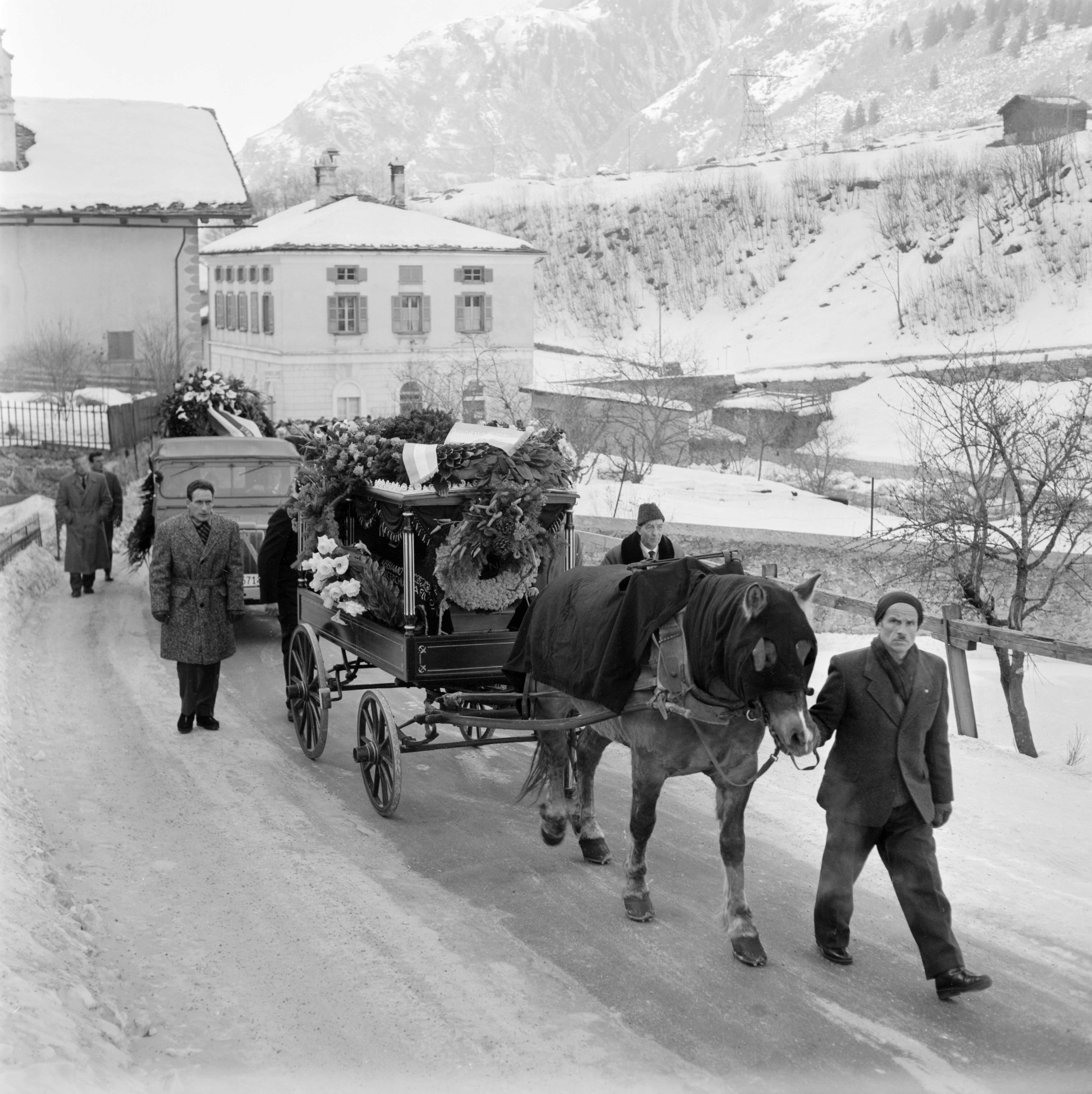
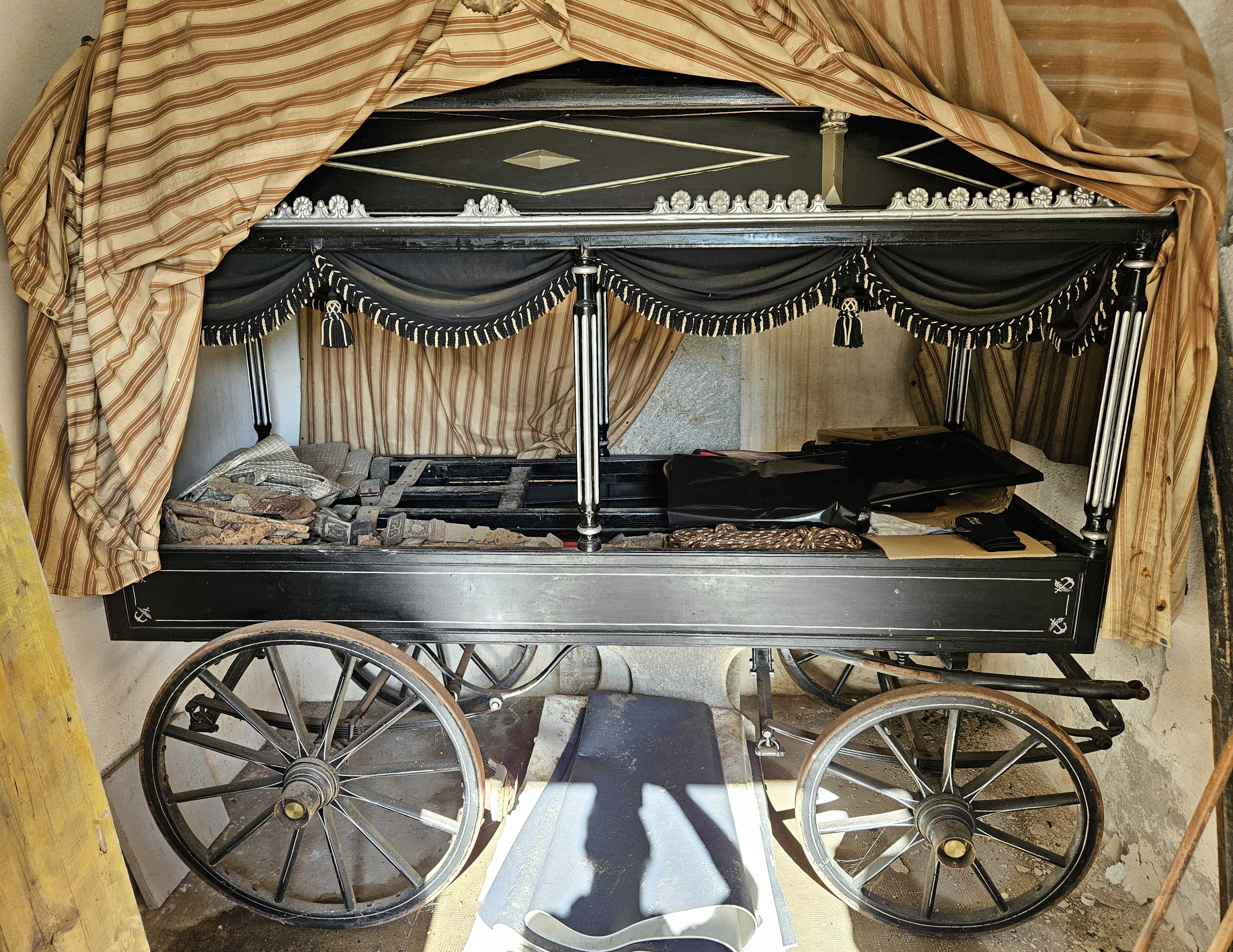
Kedzierski’s dramatic conception began with a powerful image: the hearse that, in January 1966, carried Alberto Giacometti’s body through the snow-covered landscape of Stampa. The same vehicle—still perfectly preserved today—can be seen in photographs of the funeral: black and gleaming, elaborately ornamented, its wheels coated in mud and snow. In its original form, it has travelled through time, outliving those to whom it paid its final tribute. Sixty years later, in the anniversary year of the artist’s death, that same carriage returns as a symbolic presence.
This image led the author to reflect on the role of vehicles in Giacometti’s work: from the enigmatic machines of his Surrealist creations of the 1930s to sculptures such as Femme au chariot and Le Chariot, perhaps inspired by the ancient Theban vehicle preserved in Florence’s Archaeological Museum. Throughout his work, the mechanical and the existential are intimately intertwined.
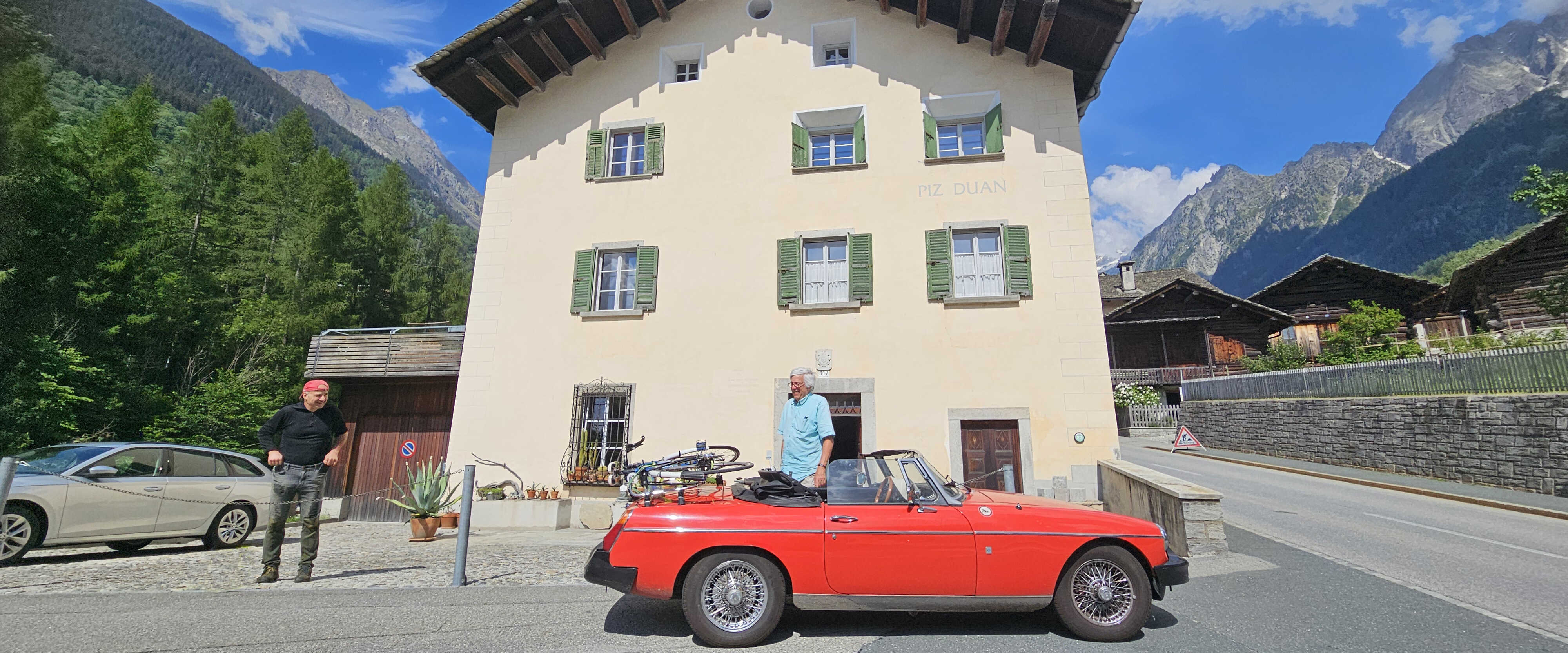
Vehicles also played a far from insignificant role in Giacometti’s everyday life: from horse-drawn carriages to Parisian, Bregaglian and Milanese taxis; from buses and trains to the red MG sports car that became, along with his model Caroline.
Il Carro takes the form of a hybrid theatrical work, combining seemingly academic lecture and performance and structured around the figure of Alberto Giacometti and the central themes of his art.
In the first act, a lecturer leads the audience through a historical and critical exploration, bringing Giacometti’s work into dialogue with episodes from his life and with his intellectual relationship with Samuel Beckett—another giant of modernism. Retracing the story of their encounters from the late 1930s onwards, she focuses on two incidents that took place in Paris in 1938 and literally brought both men to the ground: Beckett was stabbed in the street; Giacometti was struck by a car.
These two accidents presumably find their way onto the pages of a sensational, previously unknown dialogue between Alberto and Samuel, who are trapped underground in the Paris Métro during a wartime drill.
The second act features a dialogue between two âmes sœurs, with the unusual premise that both embody Caroline at different moments in her life: one during her relationship with Giacometti, the other a half a century later.
At its centre is a red MG sports car, impulsively bought for Caroline by Giacometti. As she drives through the streets of Paris, Giacometti sketches the city from the car — drawings that would later find their way into his final collection, published under the title Paris sans fin.
The recurring image of the corbillard — the hearse — becomes a metaphor for passage and for the journey of a human life, bound to the themes of movement and falling. The work concludes with an evocation of Giacometti’s funeral, which took place sixty years ago in the Bregaglia Valley, where a hearse drawn by a single mare carried the artist’s remains to the cemetery of his native village.
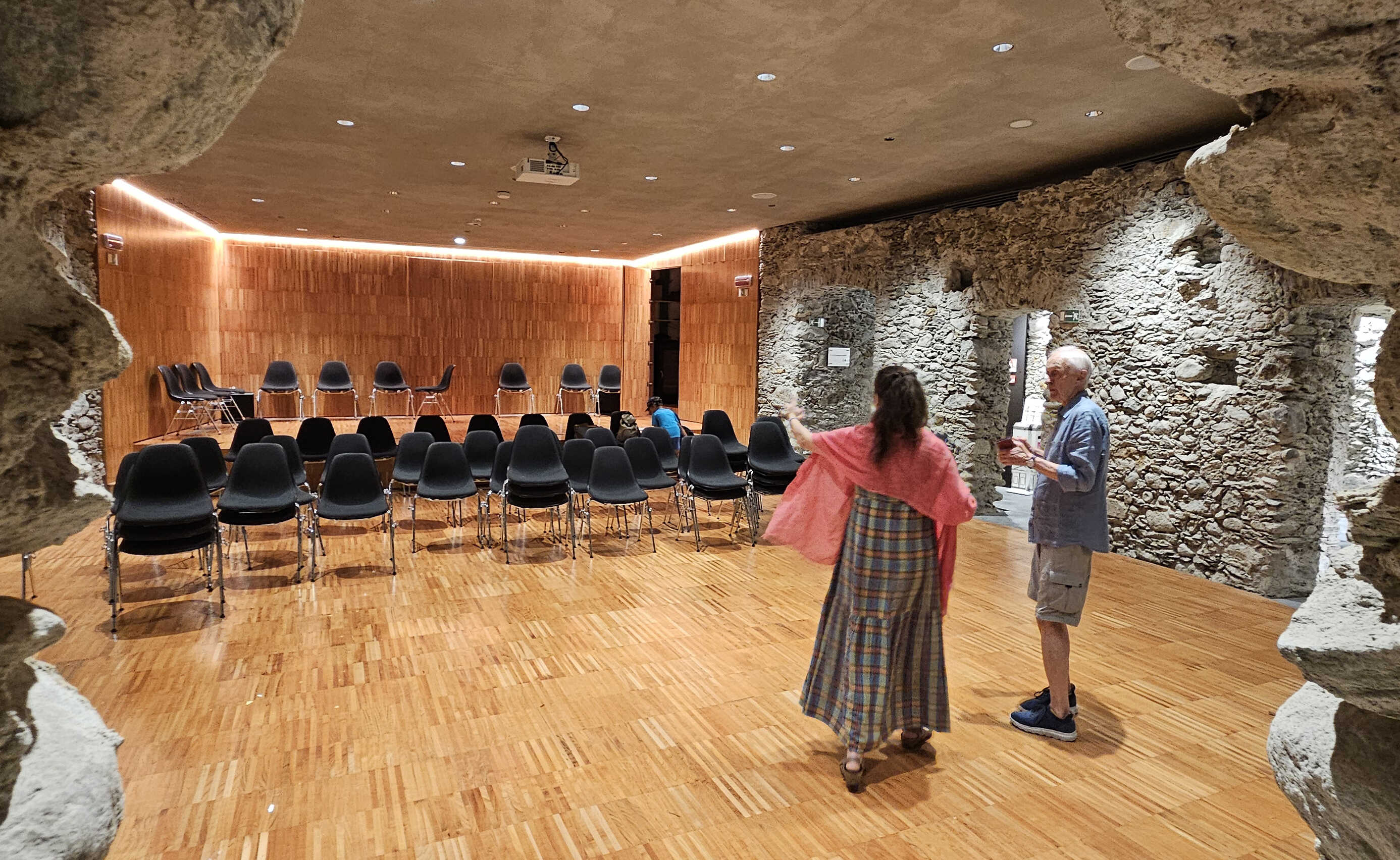
Thanks to its modular structure, The Chariot can be presented in different forms and in different settings—on the stage, in museums or in academic contexts—each time finding its own balance between critical reflection and dramatic narrative.
With the support of: